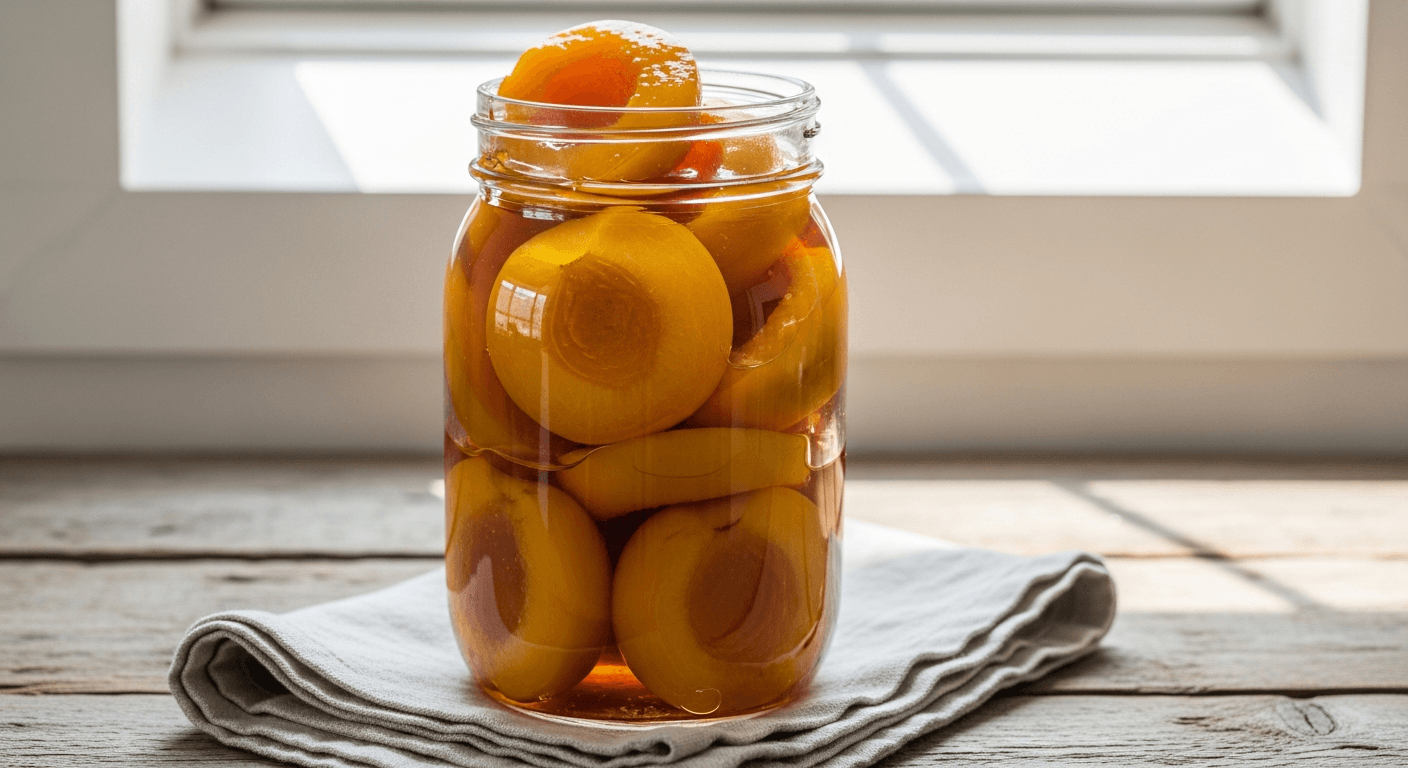
Historic recipe from Malinda Russell's 1866 cookbook "A Domestic Cook Book". Page 27. One of the earliest known cookbooks by an African American author.
This two-stage cooking method prevents the peaches from becoming mushy while achieving proper preservation. The initial brief boil in diluted syrup allows the fruit to release moisture through osmosis without overcooking. Resting overnight lets the peaches firm up as pectin sets, while the drained liquid concentrates the remaining sugar. The final cook in concentrated syrup creates a water-hostile environment (high sugar concentration) that inhibits bacterial growth, while the "waxy" stage indicates the syrup has reached the proper density (around 220°F) for long-term preservation.
Five lbs sugar to five lbs peaches; while the syrup is making prepare your fruit.
Make the syrup of half the sugar, put the peaches in the boiling syrup, cook about ten minutes; dip them out and lay on platters until the next day; drain off the juice from them, putting it with the remainder of the into the kettle and boiling to a thick syrup before adding the fruit, which must cook a few minutes, then lift them out carefully and put in jars; boil the syrup until waxy, then turn over the .
This is by design a make-ahead preservation recipe. The peaches must rest overnight between cooking stages. Once properly canned using modern water-bath canning methods, the preserved peaches will keep for up to 1 year in a cool, dark pantry.
If processed with modern water-bath canning (10 minutes for pints), sealed jars can be stored in a cool, dark pantry for up to 1 year. Once opened, refrigerate and consume within 2 weeks. If not processing for shelf-stability, store in the refrigerator immediately and use within 2 weeks. The high sugar content acts as a preservative, but refrigeration is essential for opened or unprocessed jars.
0 notes
Sign in to share your thoughts and connect with the community
Sign In to CommentLoading notes...