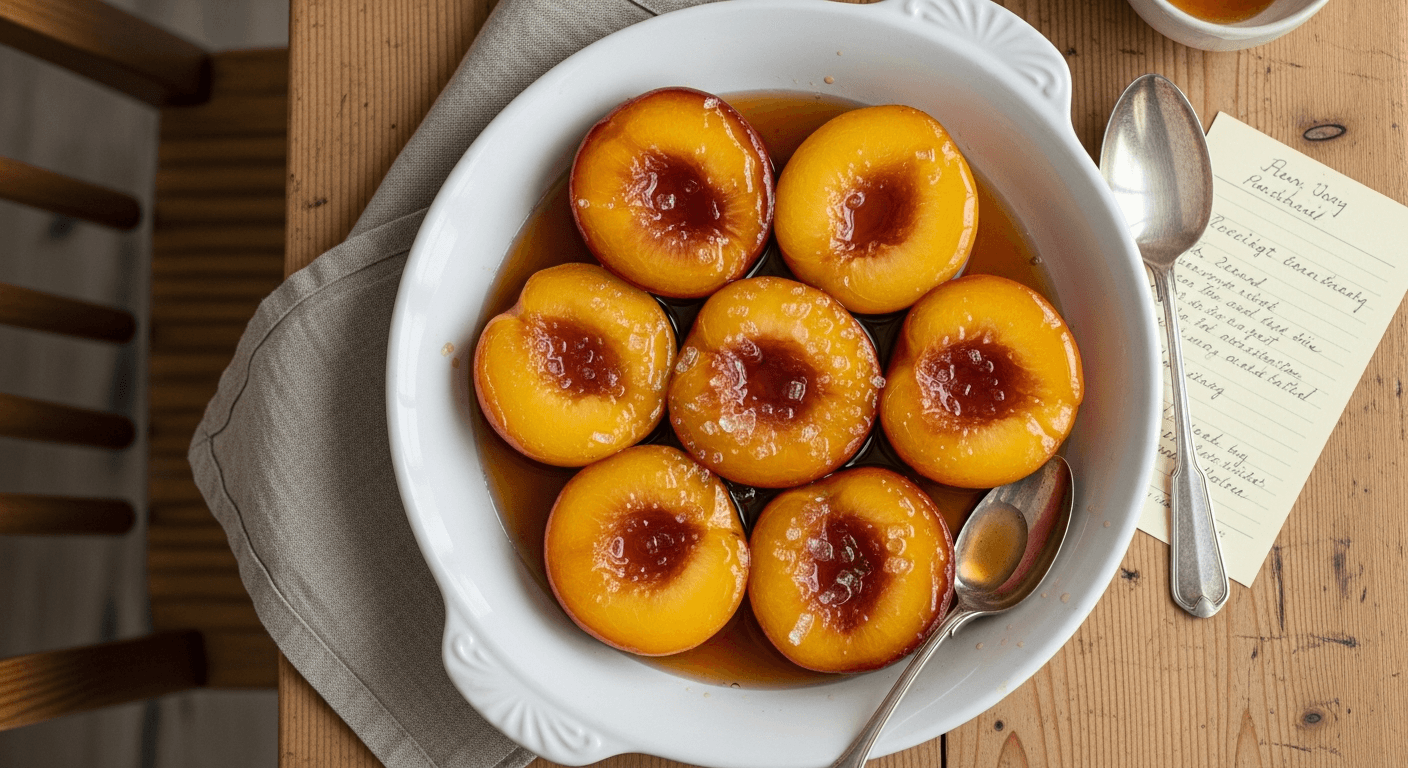
Historic recipe from Malinda Russell's 1866 cookbook "A Domestic Cook Book". Page 27. One of the earliest known cookbooks by an African American author.
The lye solution (ley) raises the pH and breaks down the pectin in peach skin, allowing easy removal without damaging the delicate flesh beneath. The cold water bath immediately halts the chemical reaction and prevents overcooking. Poaching peaches in brandy syrup at a gentle scald (around 180°F) preserves their structure while the alcohol and high sugar concentration create an inhospitable environment for microbial growth, acting as natural preservatives. The two-stage brandy addition—first undiluted, then in syrup—ensures deep flavor penetration and creates multiple layers of preservation.
Before You Begin
•This recipe uses lye (sodium hydroxide), a caustic chemical requiring careful handling. Wear rubber gloves and eye protection, and work in a ventilated area. Food-grade lye is essential.
•Select firm-ripe freestone peaches that yield slightly to pressure but aren't mushy. Clingstone varieties will be difficult to pit if desired.
•Sterilize glass jars and lids by boiling for 10 minutes before use to ensure proper preservation.
•The lye bath should be very brief (5-10 seconds maximum) to avoid damaging the fruit. Have your cold water bath ready before starting.
Community Notes
0 notes
Sign in to share your thoughts and connect with the community
Read about historical lye peeling methods or consider the modern alternative of blanching in boiling water for 30 seconds, then shocking in ice water to loosen skins.
•This is a preservation recipe, not a quick dessert—plan for the full process and proper jar sealing
Key Equipment
Large stainless steel or enamel pot for lye solution (never aluminum, which reacts with lye)Heavy-bottomed 6-quart pot or Dutch oven for syrupRubber gloves and safety glasses for lye handlingWire skimmer or slotted spoon for transferring peachesGlass canning jars with tight-fitting lids (quart-sized)Candy or instant-read thermometer
Ingredients
Instructions
1
Three dozen large ripe peaches, drop into hot ley, remove them quickly, rub off the fur, drop them into cold water, let them soak while preparing the syrup.
2
Take three lbs sugar to one quart peach brandy, boil to a syrup, drop in the peaches, let them barely scald, lift them out on a platter and let them drip, put them into a glass jar, cook the syrup well; before putting the syrup on, turn over them half a pint of peach brandy, then pour on the syrup, and put up in jars.
3
Use white sugar.
Make Ahead
This is a preservation recipe designed for long-term storage. Once properly sealed in sterilized jars with the brandy syrup, the peaches will keep in a cool, dark place for up to 1 year. The flavor actually improves after 2-4 weeks as the brandy and spices meld with the fruit.
Storage
Store sealed jars in a cool, dark pantry or cellar for up to 12 months. Once opened, refrigerate the jar and consume within 2-3 weeks. The high alcohol and sugar content preserve the peaches, but refrigeration after opening prevents fermentation. Serve the peaches with their syrup over ice cream, pound cake, or as an accompaniment to roasted meats.