Back to Recipes
American Southern
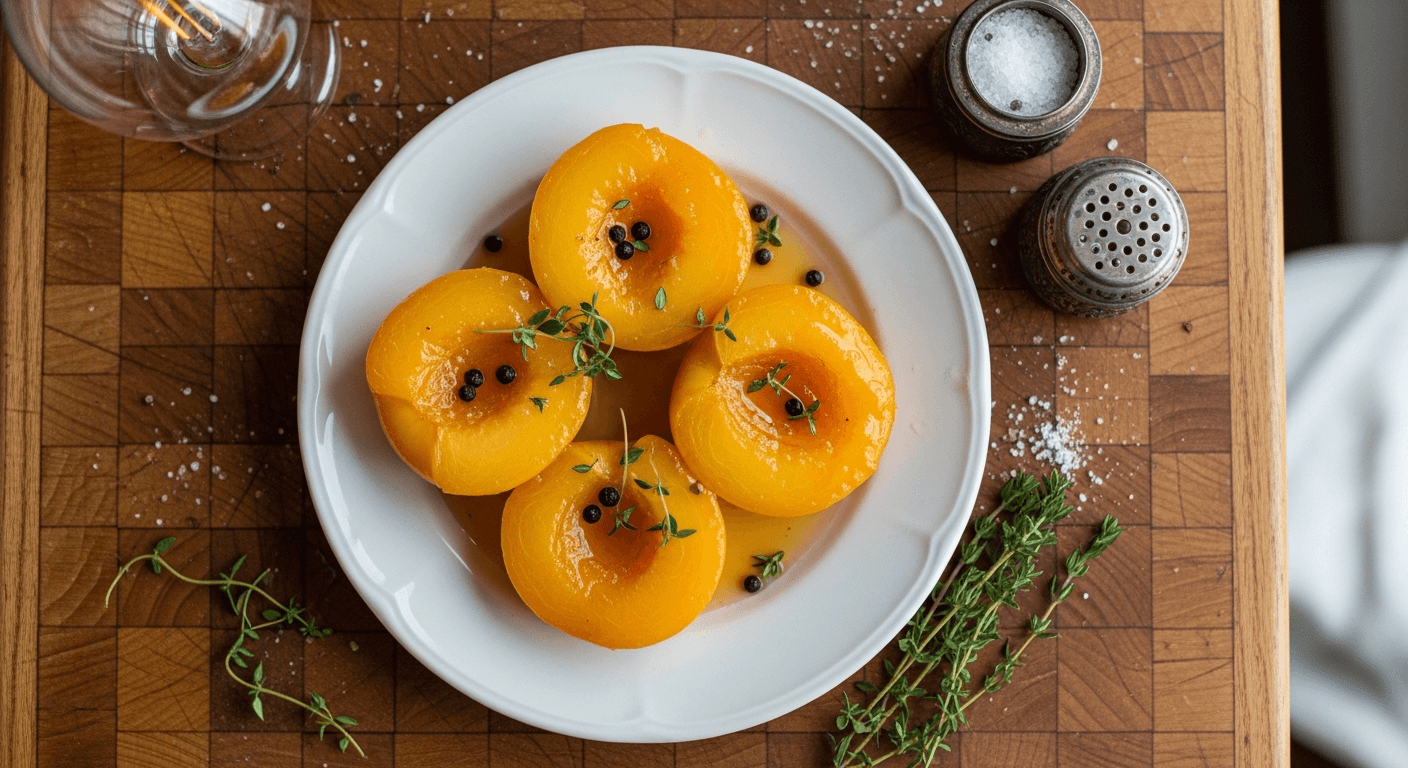
Pickled Peaches
Historic recipe from Malinda Russell's 1866 cookbook "A Domestic Cook Book". Page 27. One of the earliest known cookbooks by an African American author.
15 minPrep Time
30 minCook Time
16Servings
mediumDifficulty
Why This Recipe Works
The high sugar-to-vinegar ratio creates a concentrated brine that preserves fruit through osmotic dehydration while preventing bacterial growth. The two-stage boiling process intensifies the syrup and ensures complete penetration into the fruit, while cloves provide antimicrobial eugenol compounds. The acidity from vinegar (typically 5% acetic acid) lowers pH below 4.6, inhibiting botulism and spoilage organisms.
Before You Begin
- •Note: This historic recipe requires interpretation. '1 gallon vinegar' means 16 cups (not '1 cup' as listed), and 'peaches' means approximately 12-16 medium clingstone peaches (about 4 pounds)
- •Use clingstone peaches at peak ripeness—they should yield slightly to pressure but not be mushy. Freestone peaches will fall apart during this process
- •Sterilize your stone jar or glass canning jars by boiling for 10 minutes to prevent contamination
- •The syrup will be extremely sweet by modern standards; this is correct for preservation and reflects 19th-century tastes
- •Prepare for a two-week timeline—this is not a quick-pickle recipe but a traditional preserve requiring patience
Community Notes
0 notes
Sign in to share your thoughts and connect with the community
Sign In to CommentLoading notes...