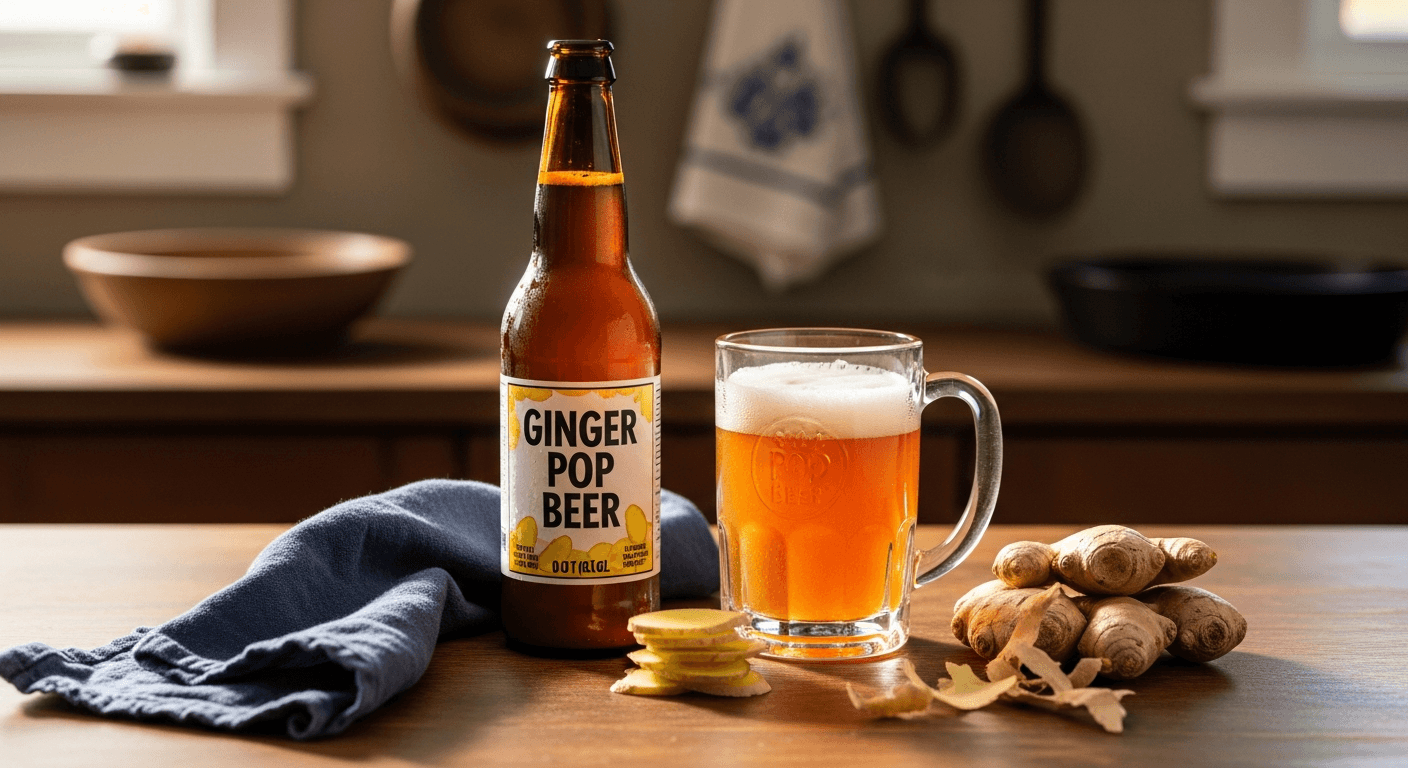
Historic recipe from Malinda Russell's 1866 cookbook "A Domestic Cook Book". Page 41. One of the earliest known cookbooks by an African American author.
Boiling ginger root extracts its volatile oils and gingerol compounds into the water, creating a concentrated flavor base. The tartaric acid (a natural fruit acid) lowers the pH, which inhibits unwanted bacteria while creating an environment where yeast can ferment safely. The egg whites act as a fining agent—their proteins bind to suspended particles and sediment, clarifying the liquid as they coagulate and sink overnight. Adding lemon oil to the hot liquid helps emulsify the aromatic compounds for better distribution throughout the beverage.
The ginger decoction (step 1) can be prepared and strained up to 2 days ahead and stored in the refrigerator. Bring back to hot before adding lemon oil and proceeding with fermentation. Once bottled, the ginger beer improves in flavor over 2-3 days as carbonation develops.
Store bottled ginger beer in the refrigerator for up to 2 weeks. The cold temperature slows continued fermentation and prevents over-carbonation. Check bottles after 3-4 days—if pressure builds excessively, carefully release some gas to prevent explosions. Once opened, consume within 3 days for best carbonation and flavor.
0 notes
Sign in to share your thoughts and connect with the community
Sign In to CommentLoading notes...
Boil the root thirty minutes in one gallon of water.
Strain off and put the oil in while hot.
Make over night; in the morning skim and bottle, keeping out the sediment.