Back to Recipes
American Southern
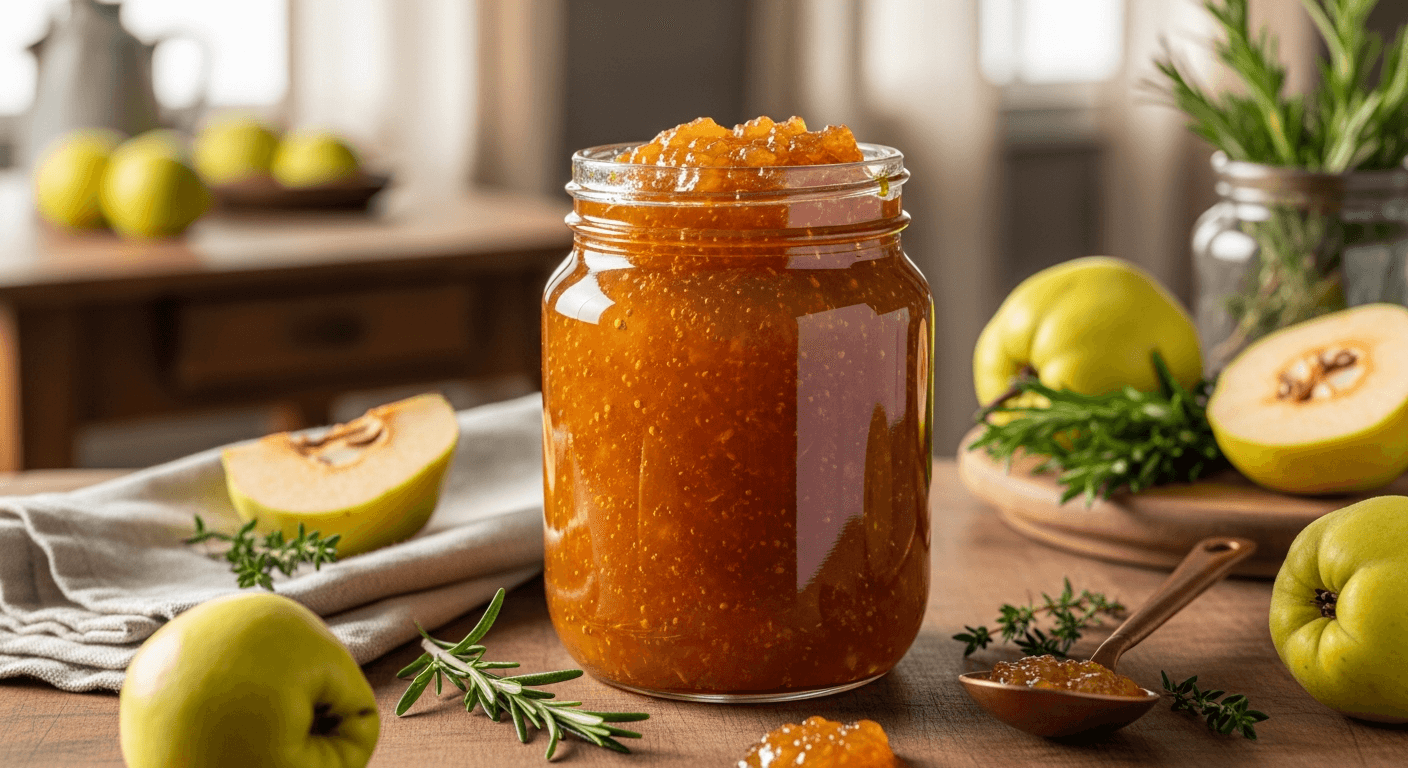
Quince Marmalade
Historic recipe from Malinda Russell's 1866 cookbook "A Domestic Cook Book". Page 31. One of the earliest known cookbooks by an African American author.
20 minPrep Time
60 minCook Time
16Servings
mediumDifficulty
Why This Recipe Works
Quinces are exceptionally high in pectin, especially in their cores and seeds, which naturally thickens the marmalade without added gelling agents. Cooking quinces transforms their hard, astringent flesh through the breakdown of cell walls and conversion of starches, while also developing their characteristic rosy color from anthocyanins oxidizing during the long cooking process. Brown sugar adds molasses notes that complement quince's floral, honey-like flavor while providing the sugar concentration needed to preserve the marmalade.
Before You Begin
- •Use 3-4 pounds of quinces total—the recipe's '1 each' is ambiguous, but you need about 1 pound of pulp after straining
- •Keep the cores and seeds while cooking (strain them out later) as they contain the most pectin for proper setting
- •The instruction says 'flour' but clearly means the strained quince pulp—this is a transcription error in the historic text
- •Have a cold plate in the freezer to test for doneness: a spoonful of marmalade should wrinkle when pushed with your finger
- •Sterilize jars and lids if canning for long-term storage
Community Notes
0 notes
Sign in to share your thoughts and connect with the community
Sign In to CommentLoading notes...