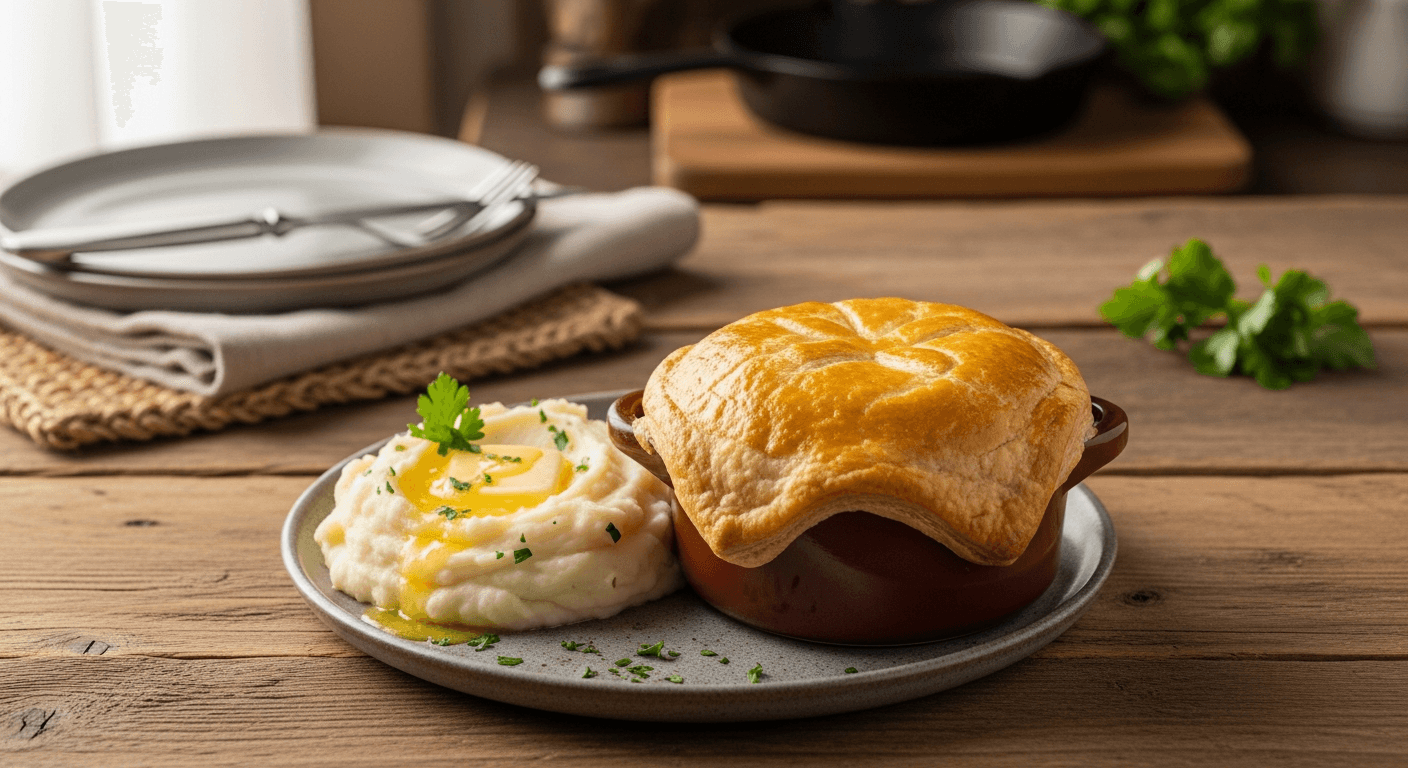
Historic recipe from Malinda Russell's 1866 cookbook "A Domestic Cook Book". Page 36. One of the earliest known cookbooks by an African American author.
Long, gentle simmering breaks down the tough collagen in beef shank into gelatin, which creates a spreadable, sliceable texture when cooled. The cooking liquid concentrates the gelatin, acting as a natural binder that holds the chopped meat together without additional ingredients. The high seasoning and tight packing in step 3 creates an anaerobic environment that inhibits bacterial growth, while the salt acts as a preservative—a traditional method of meat preservation predating refrigeration.
This recipe is designed to be made ahead. The basic version can be prepared up to 5 days in advance and stored refrigerated in an airtight container. For the traditional preserved version in step 3, pack tightly in a sterilized stone jar, cover with a layer of melted fat or parchment, and store in a cool place (below 40°F) for up to 2 months.
Store sliced potted beef wrapped tightly in plastic wrap or in an airtight container in the refrigerator for up to 5 days. The meat can also be frozen for up to 3 months; thaw overnight in the refrigerator. For the traditional preserved version, keep the stone jar in a consistently cool location (root cellar or refrigerator) and ensure the surface remains covered to prevent exposure to air.
0 notes
Sign in to share your thoughts and connect with the community
Sign In to CommentLoading notes...
Take a beef shank, put it in water sufficient to cover it; boil till tender; remove the bone and cartilage; chop the meat fine, and put back into the kettle with the liquor, which should be one quart; simmer gently; season with salt, pepper, and mace to suit the taste.
When cool, cut it in slices, to be passed around like dried beef.
Potted beef can be kept any length of time by chopping fine, seasoning high, and packing hard in a stone jar, setting it in a cool place and covering closely.