Back to Recipes
American Southern
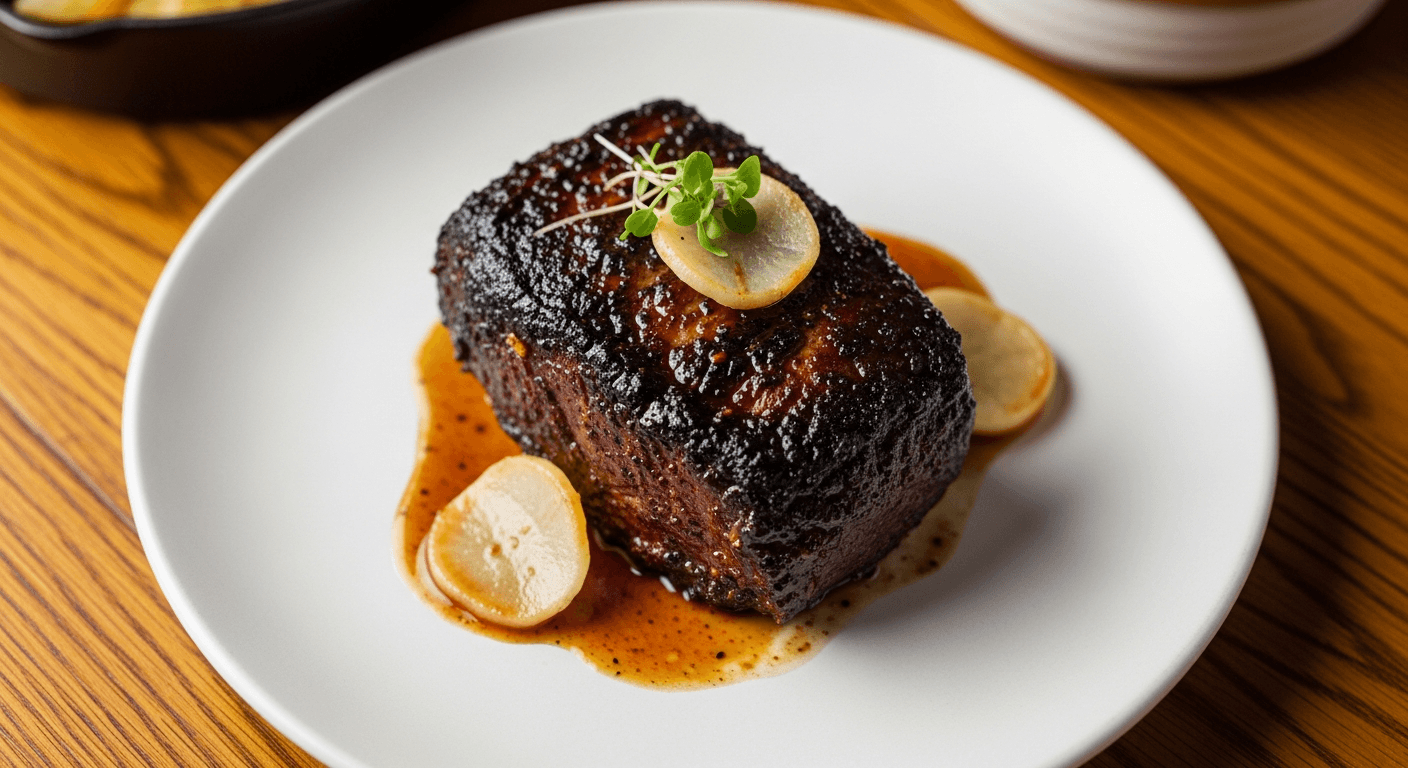
A-la-mode Beef
Historic recipe from Malinda Russell's 1866 cookbook "A Domestic Cook Book". Page 36. One of the earliest known cookbooks by an African American author.
20 minPrep Time
90 minCook Time
8Servings
hardDifficulty
Why This Recipe Works
Larding the beef with salt pork is a historic technique that bastes the lean meat from within as the fat melts during the long, slow braise. The salt pork also seasons the interior through diffusion while adding richness. The extended five-hour cooking time in liquid breaks down tough collagen into gelatin, transforming an economical cut into tender, succulent meat. The claret wine adds acidity that helps tenderize the meat while contributing complex flavor compounds.
Before You Begin
- •Use a bottom round or rump roast (3-4 pounds) for this historic recipe, as these were common 'rounds of beef' in 1866
- •Cut salt pork into ¼-inch strips about 3-4 inches long for easier threading through the meat
- •Use a sharpening steel or larding needle to create the holes if you don't have a traditional larding tool—make holes about 1 inch apart
- •The recipe will take 5½ hours total, so plan accordingly
- •Have kitchen twine ready to truss the roast after larding to help it hold its shape during the long braise
Community Notes
0 notes
Sign in to share your thoughts and connect with the community
Sign In to CommentLoading notes...