Back to Recipes
American Southern
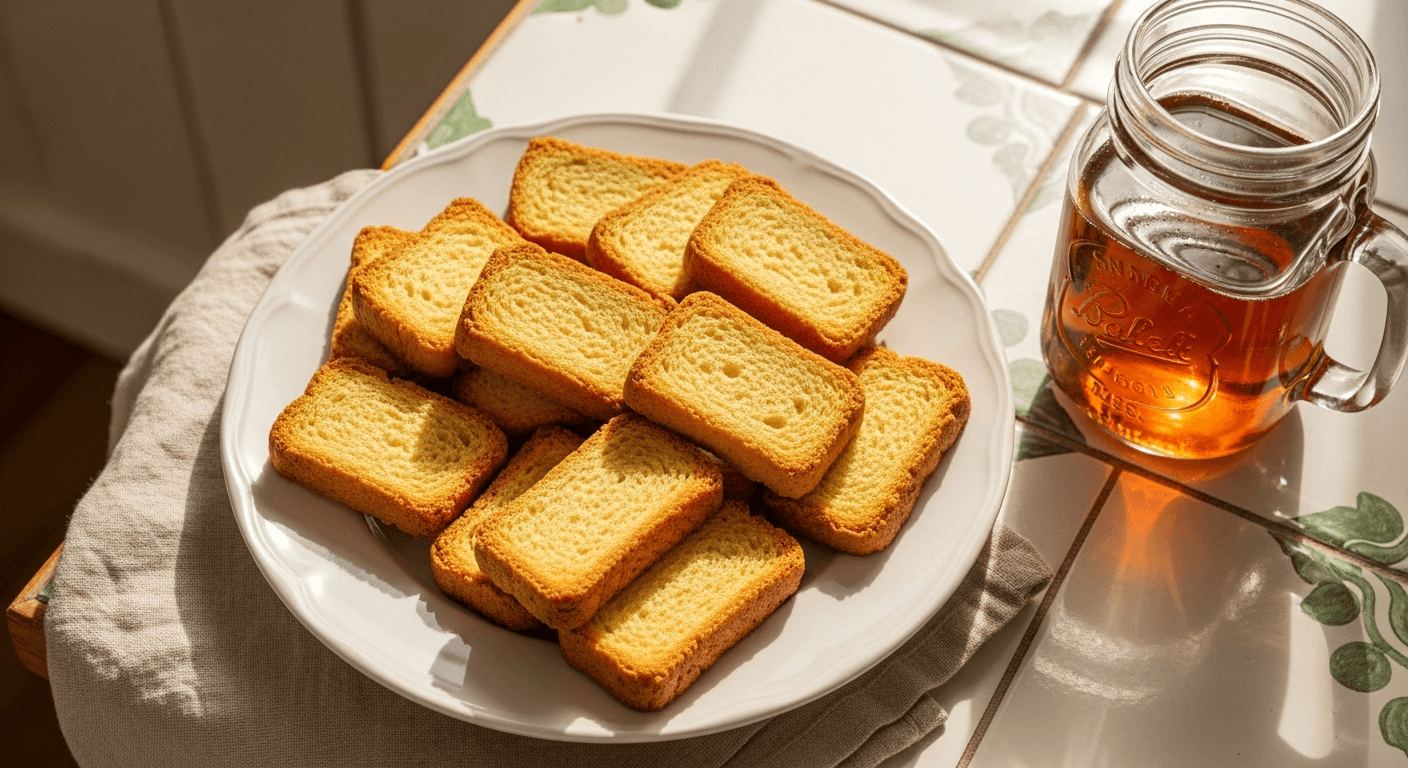
Fried Rusk
Historic recipe from Malinda Russell's 1866 cookbook "A Domestic Cook Book". Page 27. One of the earliest known cookbooks by an African American author.
15 minPrep Time
30 minCook Time
12Servings
mediumDifficulty
Why This Recipe Works
The yeast fermentation creates carbon dioxide bubbles that expand when fried, producing a light, airy interior while the high sugar content caramelizes on the exterior for a crispy crust. The eggs provide structure and richness, while the butter creates tender layers by coating flour proteins and limiting gluten development. Frying at the right temperature sets the exterior quickly, trapping steam inside for maximum puffiness similar to doughnuts.
Before You Begin
- •Use active dry yeast (about 2 tablespoons or one packet) for the '½ cup yeast' measurement, as historical measurements differ from modern standards
- •Warm the milk to 110°F before adding yeast to ensure proper activation without killing the yeast
- •Plan for 2-3 hours total rising time: first rise after mixing batter (45-60 minutes), second rise after shaping (30-45 minutes)
- •The 'thick batter' stage requires approximately 3-4 cups of flour; add gradually until it resembles thick pancake batter before the first rise
- •After the second rise, the dough should be soft but workable—add just enough flour to roll out to ½-inch thickness
Community Notes
0 notes
Sign in to share your thoughts and connect with the community
Sign In to CommentLoading notes...