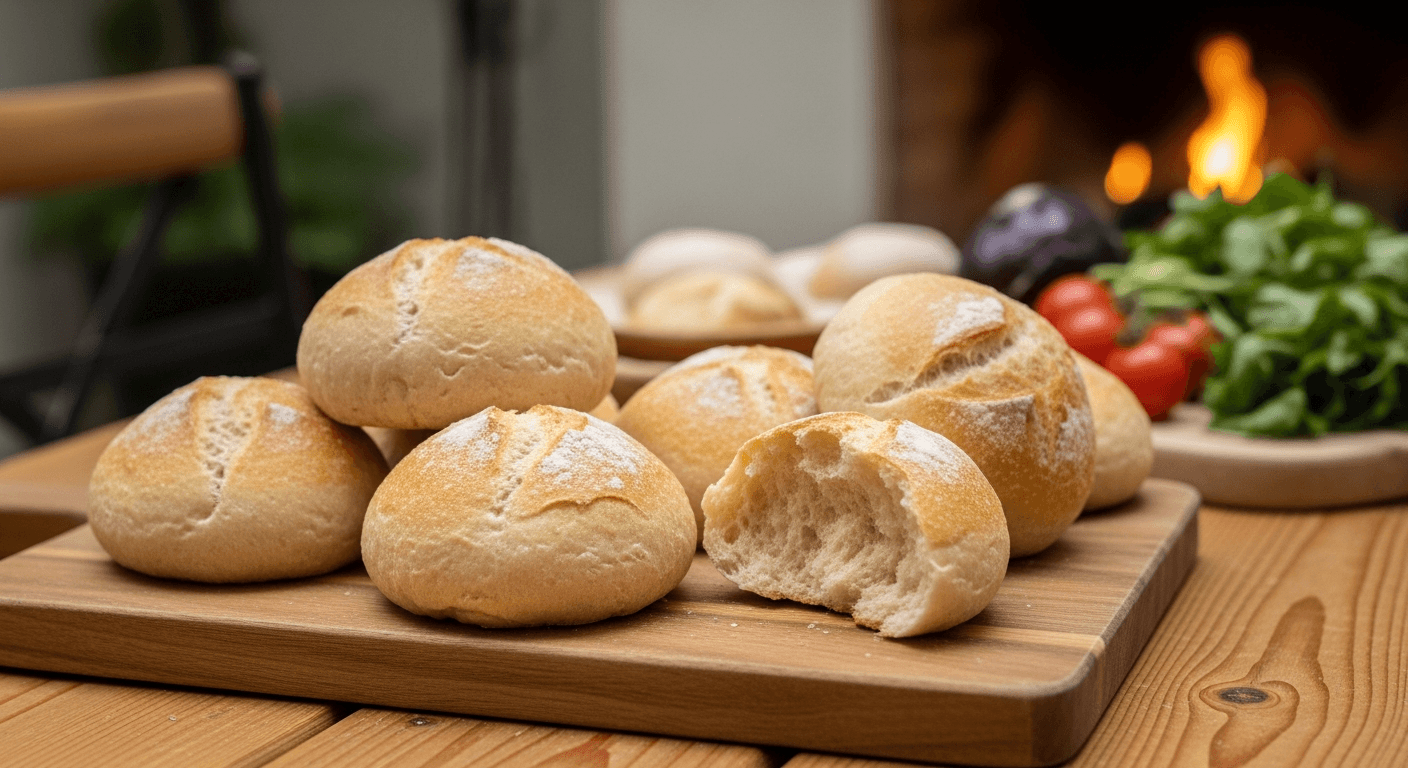
Historic recipe from Malinda Russell's 1866 cookbook "A Domestic Cook Book". Page 25. One of the earliest known cookbooks by an African American author.
The hop yeast provides wild fermentation that develops complex flavor through overnight proofing, while the extended rise allows enzymes to break down starches into sugars for better browning. Adding soda (baking soda) neutralizes excess lactic acid if the dough becomes too sour, preventing an overly tangy flavor and ensuring proper rise. The lard enriches the dough and creates a tender crumb by coating flour proteins and limiting gluten development, while the egg yolk adds fat and lecithin for structure and richness.
One quart warm milk, melt in it a small piece of lard; beat the yelk of one egg in one spoonful of , mix in to make a stiff batter, stir in three tablespoons of , set away to rise till morning, work in to make a soft dough if sour, add a little , make into rolls, rise, and bake in a quick oven.
The dough must be prepared the night before baking. After the overnight rise, shaped rolls can be refrigerated for up to 8 hours before the final rise and baking. Bring to room temperature and allow to rise until doubled before baking.
Store baked rolls in an airtight container or zip-top bag at room temperature for up to 3 days. For longer storage, freeze for up to 3 months in a freezer bag. Reheat frozen rolls in a 350°F oven for 8-10 minutes or thaw at room temperature.
0 notes
Sign in to share your thoughts and connect with the community
Sign In to CommentLoading notes...