Back to Recipes
American Southern
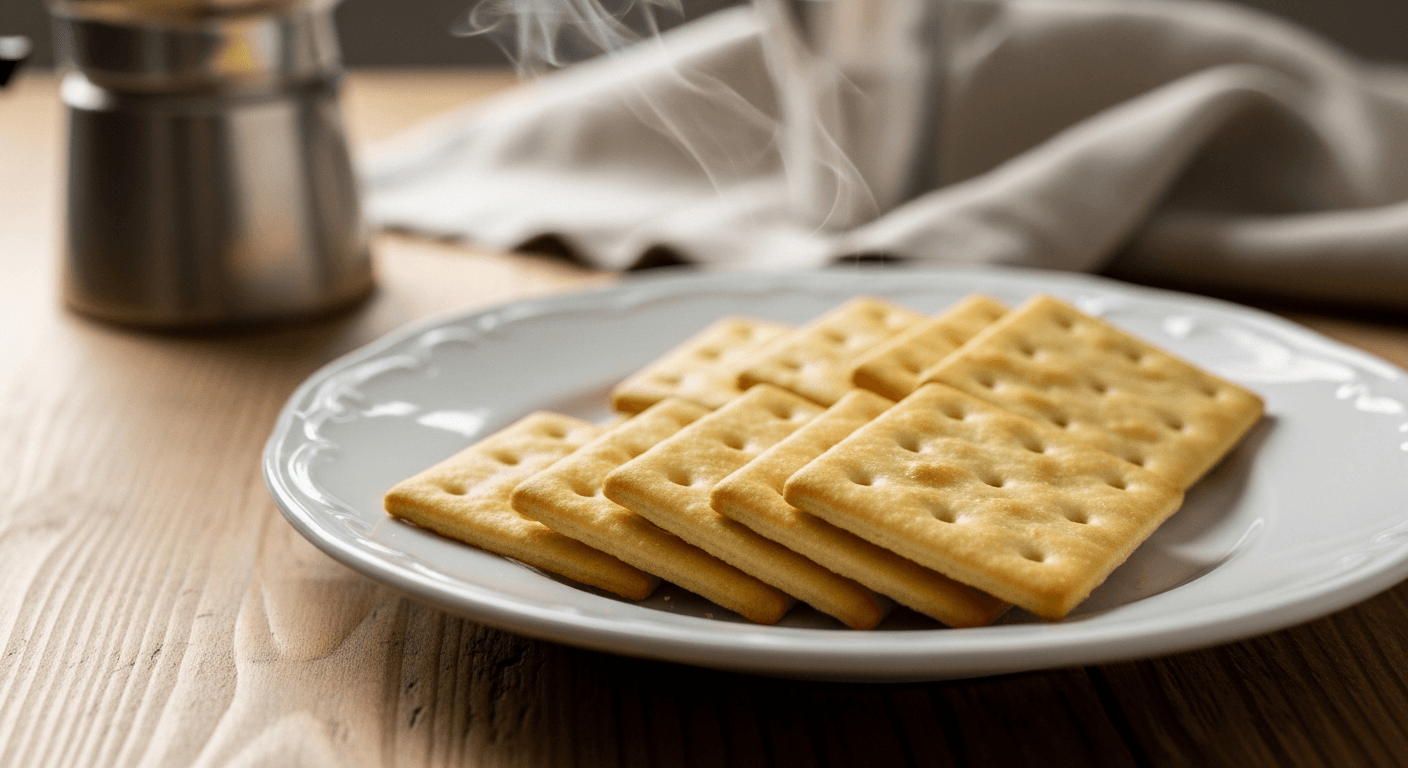
Cream Crackers
Historic recipe from Malinda Russell's 1866 cookbook "A Domestic Cook Book". Page 25. One of the earliest known cookbooks by an African American author.
15 minPrep Time
30 minCook Time
12Servings
hardDifficulty
Why This Recipe Works
The sour cream provides both fat and acidity, which tenderizes the dough while contributing tangy flavor. Kneading until the dough 'blisters' develops gluten structure that creates layers when laminated with butter, similar to puff pastry. The baking soda neutralizes some of the sour cream's acidity while creating tiny air pockets for a lighter texture. The lamination technique—folding butter into the dough repeatedly—creates distinct flaky layers as water in the butter turns to steam during baking.
Before You Begin
- •Keep the butter very cold (refrigerate or freeze for 15 minutes before using) to prevent it from melting into the dough during lamination
- •The ingredient list appears to have errors typical of historic recipes—interpret '1 each flour' as 'flour as needed' (approximately 4-5 cups) to achieve a stiff, kneadable dough
- •Work in a cool environment and chill the dough between folding sessions if the butter begins to soften
- •The recipe calls for two butter additions: 0.5 lb mixed into the initial dough and 0.75 lb for lamination
- •Kneading until the dough 'blisters' means working it for 8-10 minutes until you see air bubbles forming beneath the surface
Community Notes
0 notes
Sign in to share your thoughts and connect with the community
Sign In to CommentLoading notes...