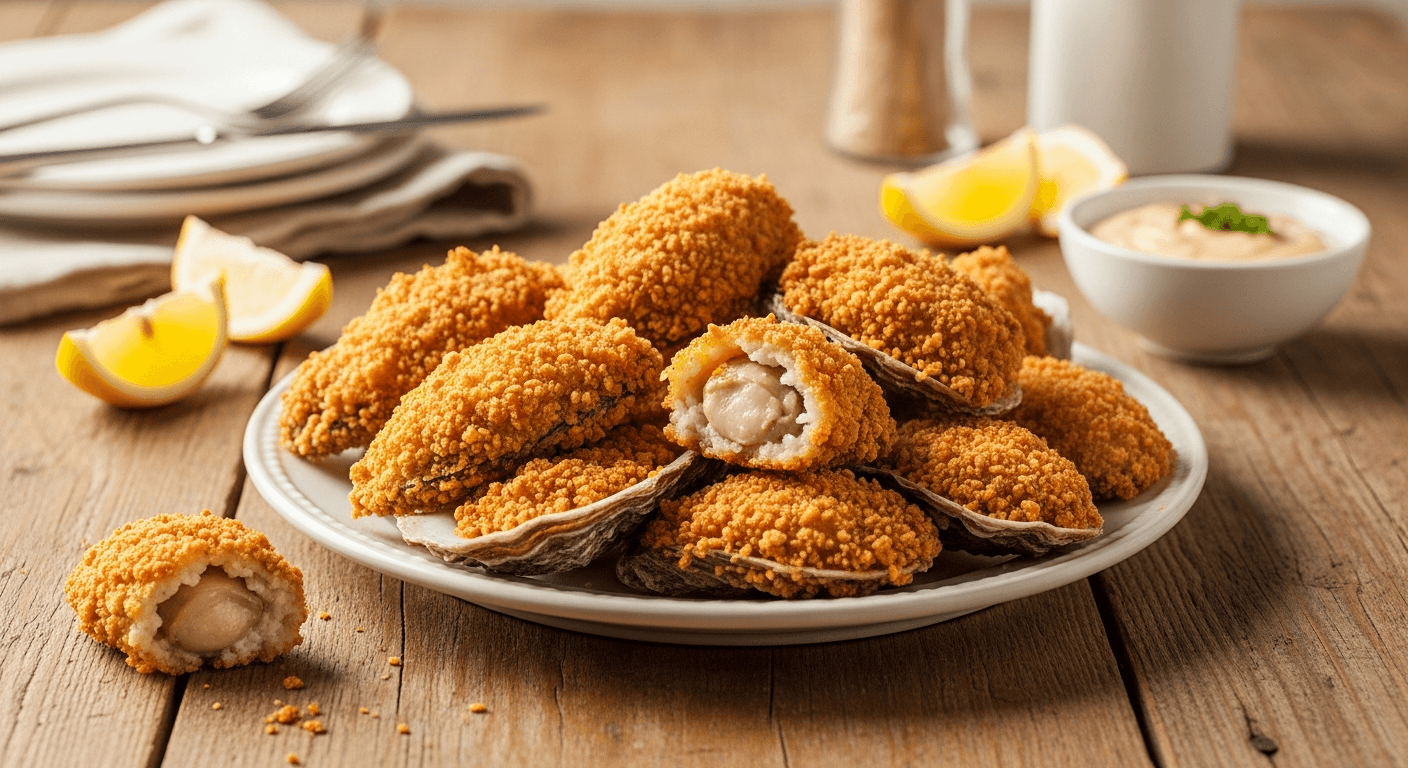
Historic recipe from Malinda Russell's 1866 cookbook "A Domestic Cook Book". Page 39. One of the earliest known cookbooks by an African American author.
The vinegar soak serves a dual purpose: its acidity firms the oyster proteins through mild denaturation, helping them hold their shape during frying, while simultaneously cutting through any excess brininess. The egg-based batter creates a protective coating that seals in moisture and prevents the delicate oysters from overcooking, while the proteins coagulate quickly in hot fat to form a crispy, golden shell. Using butter or lard (which has a higher smoke point than butter) ensures proper heat transfer for achieving the ideal contrast between crispy exterior and tender interior.
The batter can be prepared up to 2 hours ahead and refrigerated, though it may need thinning with a tablespoon or two of milk before use. The oysters should be soaked in vinegar (about 2 tablespoons per pint of oysters for 10-15 minutes) just before frying for best texture.
Fried oysters are best consumed immediately for optimal texture. Leftovers can be stored in an airtight container in the refrigerator for up to 1 day and reheated in a 400°F oven on a wire rack for 8-10 minutes, though they will lose some crispness. Not recommended for freezing.
0 notes
Sign in to share your thoughts and connect with the community
Sign In to CommentLoading notes...
Let the oysters stand in vinegar while you prepare a batter of eggs or milk and flour; season the batter to your taste; drop the oysters into the batter, and fry in butter or lard.