Back to Recipes
American Southern
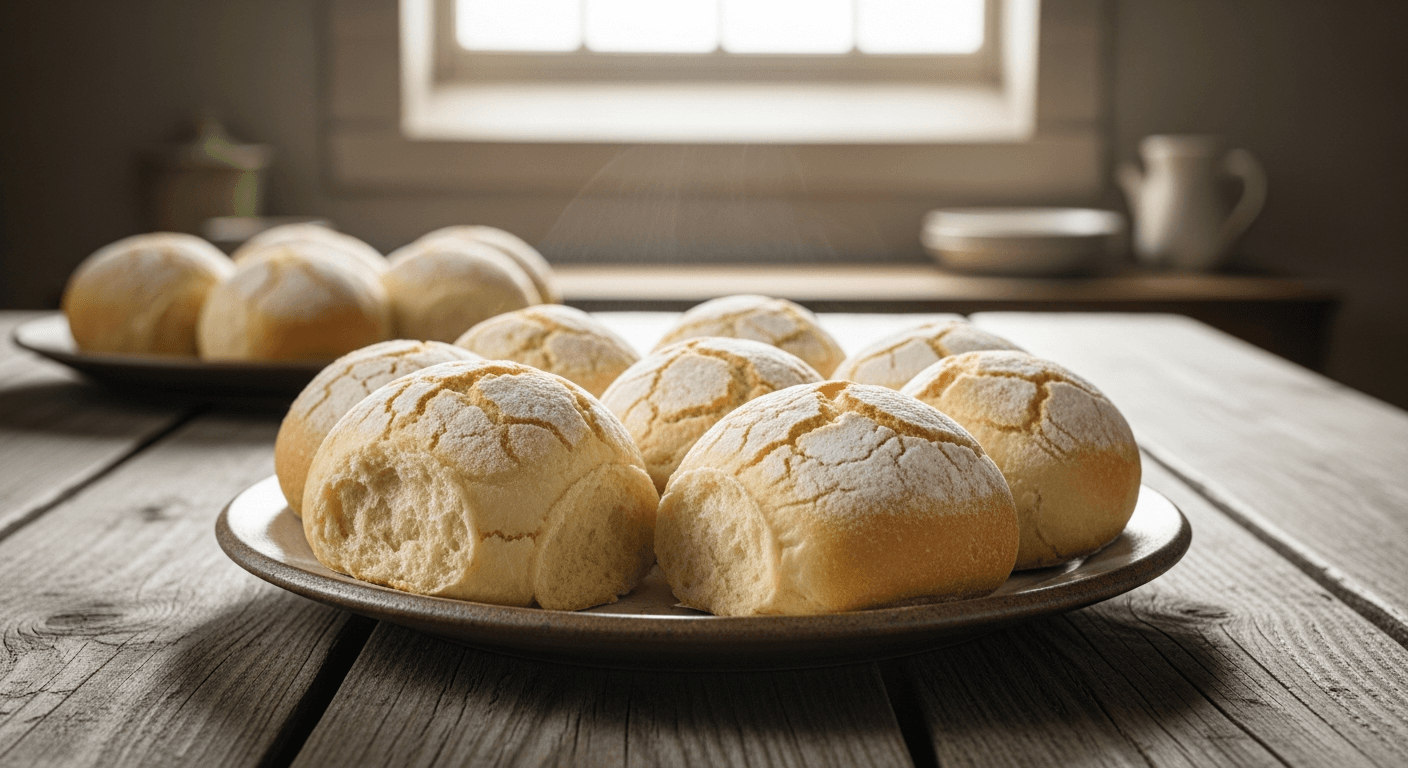
Cream Tartar Rolls
Historic recipe from Malinda Russell's 1866 cookbook "A Domestic Cook Book". Page 26. One of the earliest known cookbooks by an African American author.
15 minPrep Time
30 minCook Time
12Servings
mediumDifficulty
Why This Recipe Works
This historic recipe uses a chemical leavening system where cream of tartar (an acid) reacts with baking soda (a base) to produce carbon dioxide gas, creating a tender, risen roll without yeast. The mechanical action of kneading and pounding develops just enough gluten structure to trap the gas bubbles while keeping the crumb soft. Rubbing cold butter into the flour coats some of the flour particles, limiting gluten development and creating a more tender, biscuit-like texture.
Before You Begin
- •Use cold butter straight from the refrigerator for easier incorporation and better texture
- •A 'piece of butter half the size of a hen's egg' equals approximately 2 tablespoons or 1 ounce
- •Dissolve the baking soda completely in the milk before adding to prevent uneven rising and bitter pockets
- •Work quickly once the acid and base are combined, as the leavening reaction begins immediately
- •A 'quick oven' in 1866 terminology means a hot oven—preheat to 425°F for proper rise and browning
Community Notes
0 notes
Sign in to share your thoughts and connect with the community
Sign In to CommentLoading notes...