Back to Recipes
American Southern
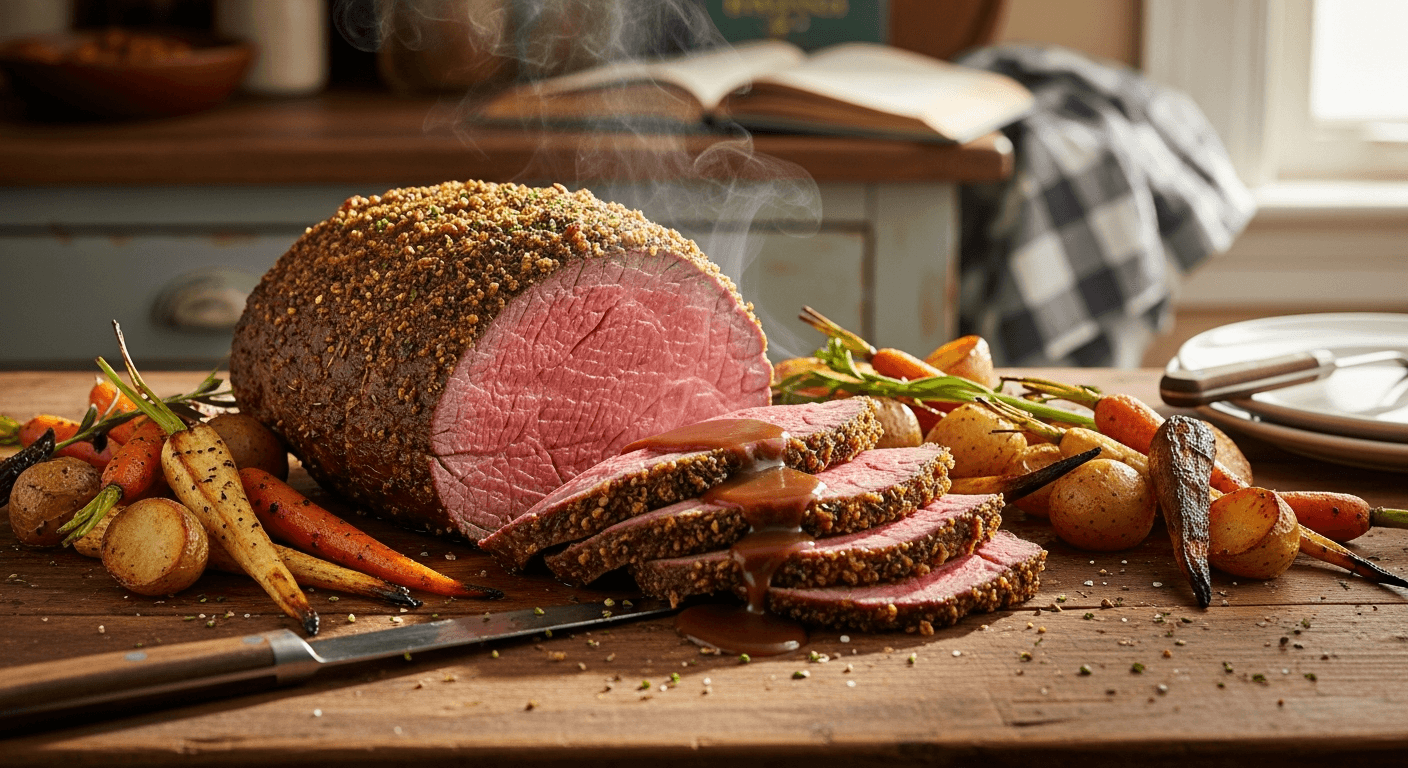
Best way to Roast Beef
Historic recipe from Malinda Russell's 1866 cookbook "A Domestic Cook Book". Page 37. One of the earliest known cookbooks by an African American author.
20 minPrep Time
90 minCook Time
8Servings
mediumDifficulty
Why This Recipe Works
Salting the meat ahead draws out moisture through osmosis, which then dissolves surface proteins to create a flavorful crust when exposed to high heat. The elevation on a brick allows air circulation and prevents the roast from stewing in its juices, while the dual-heat method (simmering below, quick heat above) mimics modern convection roasting. The flour coating absorbs surface moisture and aids in browning through the Maillard reaction, creating a deeply flavored exterior while the meat's own juices provide a self-basting effect.
Before You Begin
- •This historic recipe requires interpretation: 'beef' likely means a 3-4 pound beef roast (chuck, round, or rump); use 2 teaspoons salt and 1 teaspoon pepper per pound
- •Bring the roast to room temperature for 1-2 hours before cooking for even heat penetration
- •Use an oven-safe rack or improvised elevation method instead of a brick to allow airflow beneath the roast
- •Preheat your oven to 450°F for the 'quick heat' top browning, with pan positioned in lower-middle rack
- •Budget 20-25 minutes per pound cooking time; use an instant-read thermometer for doneness (125°F for rare, 135°F for medium-rare)
Community Notes
0 notes
Sign in to share your thoughts and connect with the community
Sign In to CommentLoading notes...