Back to Recipes
American Southern
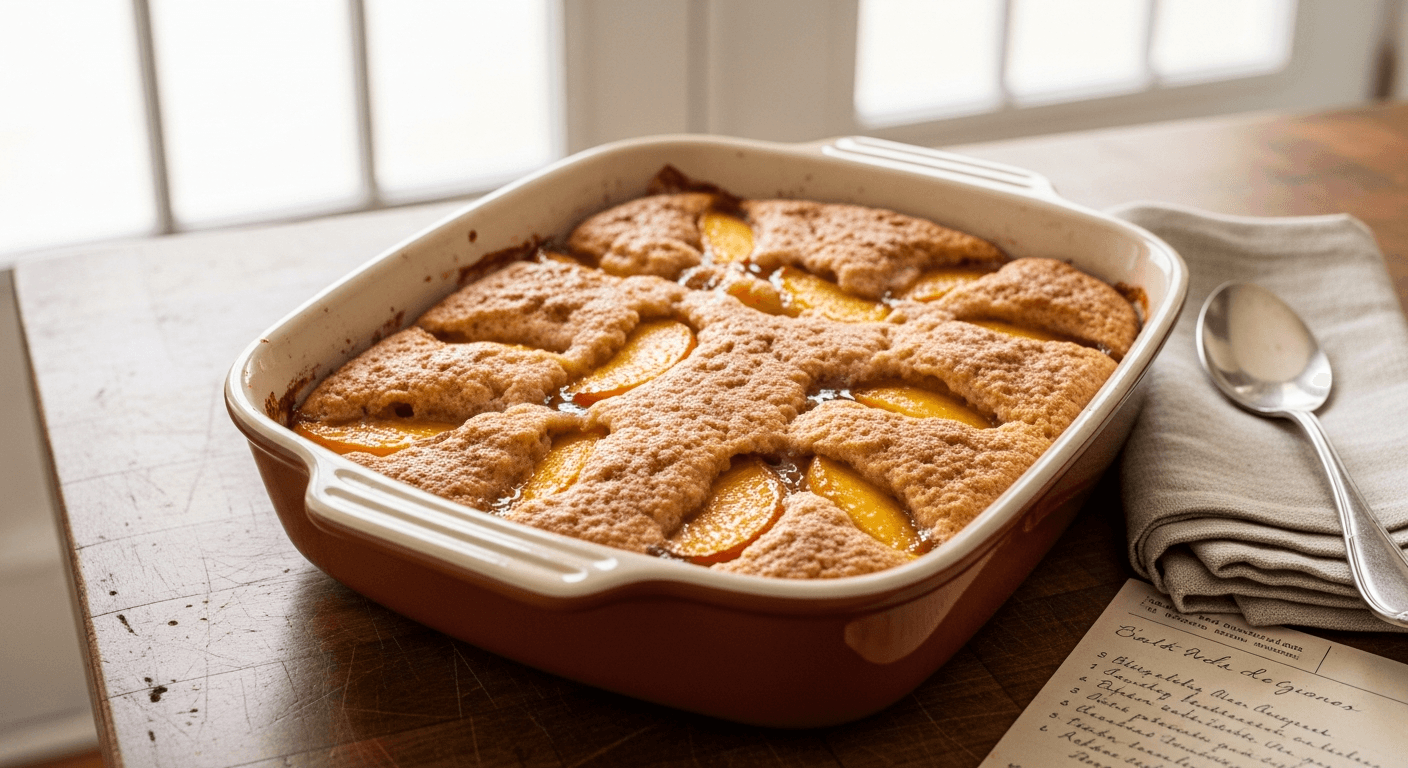
Baked Peach Cobbler
Historic recipe from Malinda Russell's 1866 cookbook "A Domestic Cook Book". Page 32. One of the earliest known cookbooks by an African American author.
15 minPrep Time
30 minCook Time
8Servings
mediumDifficulty
Why This Recipe Works
Scalding peaches loosens their skins through heat-induced breakdown of pectin, making them easier to peel while preserving the fruit's structure. Pre-stewing the peaches releases their natural juices and concentrates flavors through evaporation, preventing a soggy bottom crust. Dotting butter over the fruit creates pockets of richness and helps conduct heat evenly, while the double-crust design traps steam to cook the fruit thoroughly and develop a golden, flaky pastry.
Before You Begin
- •Use ripe but firm peaches (about 2 pounds) that give slightly when pressed—overly soft fruit will break down too much during stewing
- •Prepare or purchase pastry dough ahead of time and keep it chilled until ready to use; warm dough is difficult to work with and produces tough crust
- •Adjust sugar quantity (start with 1/2 to 3/4 cup) based on peach sweetness, tasting the stewed fruit before assembling
- •Have a rimmed baking sheet under the cobbler pan to catch any drips during baking
- •Cut steam vents in the top crust to allow moisture to escape and prevent a soggy top
Community Notes
0 notes
Sign in to share your thoughts and connect with the community
Sign In to CommentLoading notes...